Written by Lesallan – November 9, 2023
I completely agree with the interpretation of the Pauline text: “And God has placed in the church first of all apostles, second prophets, third teachers, then miracles, then gifts of healing, of helping, of guidance, and of different kinds of tongues” from 1 Corinthians 12:28 (NIV). It is clear that each member of the church has a unique spiritual role and gift, assigned by God, according to His will. Rather than comparing ourselves to others based on our achievements, we should work together to fulfill the church’s spiritual mission. This mission extends beyond the physical building and into our communities, workplaces, and families. In order to do this, we must identify our own spiritual gifts by seeking feedback from others who know us well, exploring our passions, abilities, and opportunities, and praying for guidance. By using our gifts to glorify God and bless others, we can appreciate and encourage the diversity of gifts and roles that God has given His people. Let us avoid judging or envying those who have different assignments than us and instead work together to fulfill our spiritual mission.

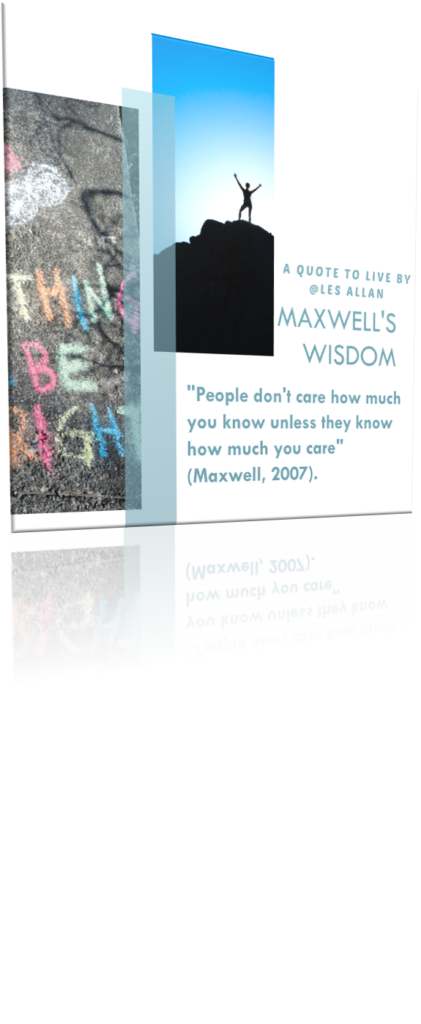
John Maxwell’s statement, “People don’t care how much you know unless they know how much you care” (Maxwell, 2007), can indeed apply to all generational groups, including Generation Z, Generation Y (Millennials), and Generation X. Here is why:
Emotional Intelligence: Learning emotional intelligence, which includes empathy, is a measurable skill that can improve effectiveness, relationships, the quality of life, and well-being for all ages. Generational Differences: Unconscious biases can arise from generational differences, affecting day-to-day interactions. Each generation can show or interpret care differently, but recognizing and understanding these differences can improve empathy, communication, and collaboration. Generational Empathy: An approach to address generational differences is through generational empathy. It involves reflecting on and minimizing harmful biases to understand better and show care for all generations. Bridging Differences: Empathy can bridge generational gaps by engaging with different experiences and perspectives. This can lead to more effective communication, collaboration, and a better sense of caring for one another.
Although the methods of demonstrating and comprehending care may differ among Generation Z, Y, and X, the core message of Maxwell’s declaration – that displaying care is essential for achieving effective communication and influence – holds true across all demographics. The key is grasping, honoring, and appreciating individuals’ unique experiences and viewpoints, irrespective of their generational affiliation.
~Lesallan
References:
Maxwell, J. C. (2007). The 21 irrefutable laws of leadership. Thomas Nelson. (Original work published 1998).