Lesallan | March 11, 2025
Adapting to Change: Key Takeaways from “Who Moved My Cheese?” and Organizational Change Theories
Lesallan | March 11, 2025
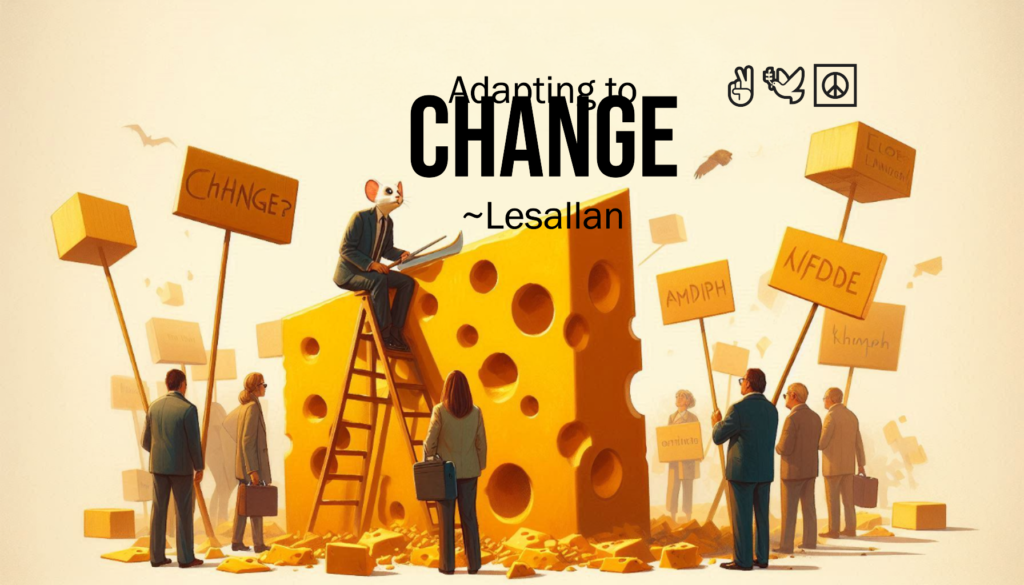
In analyzing the video “Who Moved My Cheese?” (B, 2012), three pivotal insights emerge. First, the narrative underscores the inevitability of change, highlighting that individuals and organizations need to cultivate readiness. The characters exemplify that change is omnipresent in both personal and corporate landscapes, and the capacity to anticipate and adapt is integral to achieving sustained success. Second, the video stresses the critical role of mindset in navigating change. Characters like Haw demonstrate that a positive and initiative-taking approach enables individuals to identify new opportunities and flourish, contrasting with those who resist adaptation. Lastly, the narrative accentuates the value of flexibility and open-mindedness, empowering individuals to explore new avenues and opportunities. Characters like Sniff and Scurry, who embraced the challenge of stepping beyond their comfort zones, exhibited tremendous success.
Upon introspection regarding my personality traits, I find a strong alignment with the character Haw from “Who Moved My Cheese?” (B, 2012). Initially, I exhibit resistance to change, paralleling Haw’s reluctance, but I recognize and embrace the positive outcomes that change can yield, prompting initiative-taking engagement. This transformation in Haw’s character reflects my journey of adapting to new environments and challenges.
In contrast, the character Sniff exemplifies optimal adaptability to change. Sniff demonstrates a remarkable ability to identify shifts in his surroundings and respond swiftly without hesitation. This initiative-taking stance represents an essential strategy for effectively managing organizational transformations, highlighting the importance of agility and responsiveness in a dynamic landscape. For instance, Sniff’s quick response to the cheese moving is a lesson for organizations to be proactive in identifying and responding to changes in their environment, thereby ensuring their survival and success in the long run.
Analyzing organizational change theories reveals a strong alignment between Lewin’s Change Management Model and Kotter’s Eight-Step Process, as illustrated in the scenarios presented in the video. Lewin’s model comprises three phases: unfreezing, changing, and refreezing. This framework is reflected in the character’s evolution from initial resistance to change through exploring alternatives to establishing new behaviors and routines (Burke, 2023). Conversely, Kotter’s model underscores the importance of establishing a sense of urgency and forming a guiding coalition, concepts that resonate in the characters’ collaborative efforts as they navigate their challenges. For instance, the initiative-taking approach taken by Sniff and Scurry in their quest for new cheese exemplifies Kotter’s principles of creating and articulating a compelling vision for change. This constructive collaboration between the two models highlights the dynamics of effective change management in organizational contexts and makes the audience feel connected and part of a team.
The characters would have gained significantly from adopting a collaborative methodology to enhance their outcomes. Changing organizational contexts, engaging stakeholders in the change management process, and cultivating a supportive ecosystem is critical for achieving effective and sustainable results (Burke, 2023). By integrating these principles, organizations can navigate change with greater efficacy, thereby promoting a culture of adaptability and collaborative problem-solving.
Blessings,
Lesallan
References:
B, K. (2012). Who Moved My Cheese [YouTube Video]. In YouTube.
Burke, W. Warner. (2023). Organization change: Theory and practice (6th Edition). Thousand
Oakes, CA: Sage.