Author: Lesallan
Affiliation: Independent Scholar
Date: January 18, 2026
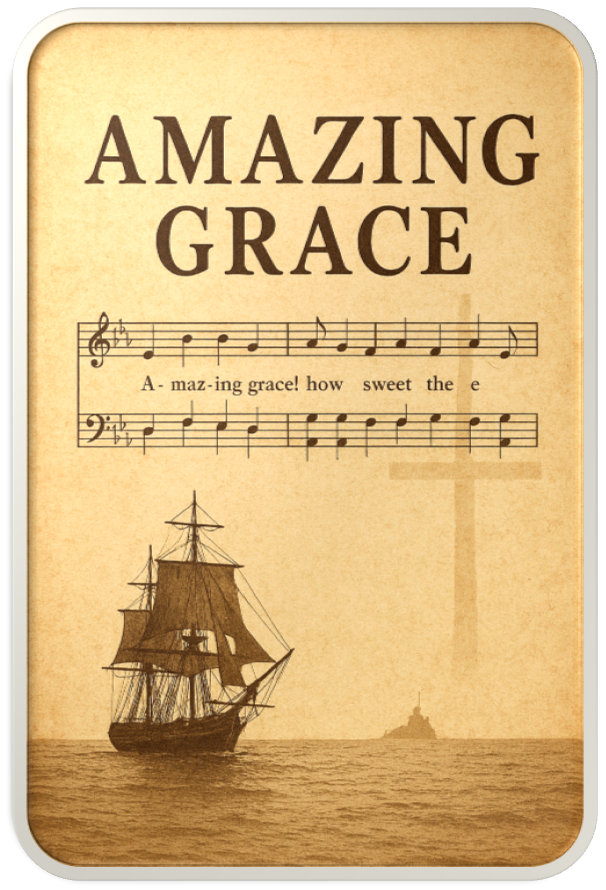
Amazing Grace is widely recognized as one of the most enduring hymns in the English language. Originally a personal testimony of spiritual transformation, the text has been paired with multiple melodies and adapted across musical traditions. This paper summarizes the hymn’s origin, musical characteristics, and contemporary relevance, and offers guidance for presenting the hymn in public-facing formats.
Historical Context
John Newton composed the text that became Amazing Grace in the late eighteenth century. The poem first appeared in a collection of hymns and devotional pieces and later circulated widely in both Britain and the United States. Newton’s life—marked by maritime service, a dramatic conversion experience, ordination in the Anglican Church, and later involvement in abolitionist causes—provides the moral and historical backdrop for the hymn’s themes of repentance and redemption.
Musical Characteristics
The hymn’s text is written in common metre, which facilitates pairing with a variety of tunes and makes it accessible for congregational singing. The melody most commonly associated with Amazing Grace in contemporary practice is known as New Britain, a tune that became popular in the United States during the nineteenth century. The combination of simple metre and a memorable melodic contour has enabled the hymn’s adaptation into folk, gospel, orchestral, and popular arrangements.
Cultural Significance and Ethical Considerations
Amazing Grace carries a universal message of mercy and second chances that resonates across religious and secular audiences. At the same time, the hymn’s authorship raises important ethical considerations: John Newton’s earlier participation in the Atlantic slave trade and his later repentance and abolitionist advocacy complicate the hymn’s history. A full account of the hymn’s significance should acknowledge this complexity, presenting both the hymn’s consolatory power and the historical realities that shaped its author.
Conclusion
Amazing Grace endures because of its concise, emotionally direct text and its musical flexibility. Its continued relevance depends on honest engagement with the hymn’s full history—celebrating its message of redemption while acknowledging the moral complexities of its author’s life. Presentations that combine musical appreciation with historical transparency will best honor the hymn’s layered legacy.
~Lesallan ✝️🕊️💞
References:
Newton, J. (1779). Olney Hymns.
Hymnary.org. (n.d.). Amazing Grace entry. https://hymnary.org
Library of Congress. (n.d.). Collections related to John Newton and hymnody. https://www.loc.gov
Wikipedia. (n.d.). Amazing Grace article. https://en.wikipedia.org/wiki/Amazing_Grace (en.wikipedia.org in Bing)