Lesallan Bostron
September 27, 2026
How Do Mormons Live in 2026
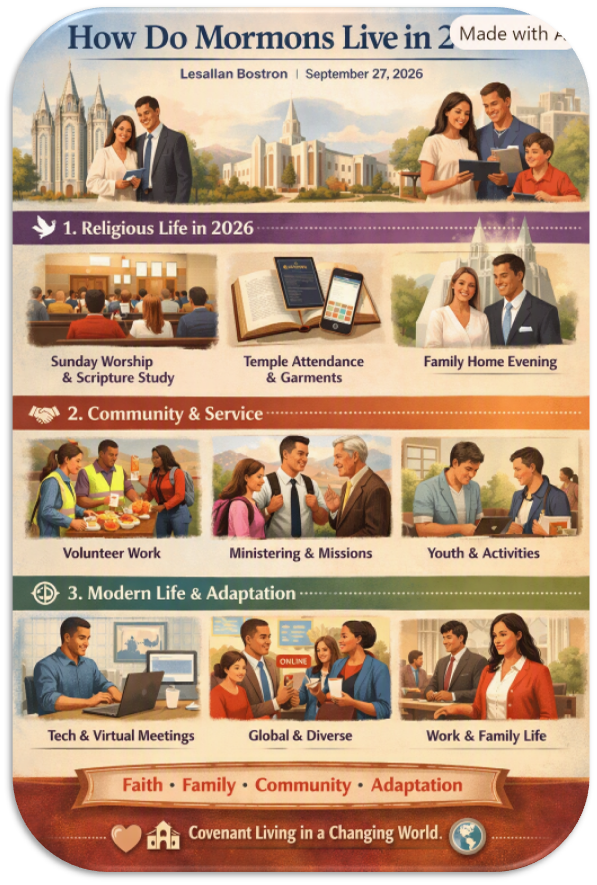
Mormons—more accurately, members of The Church of Jesus Christ of Latter-day Saints—live in 2026 much as they have for decades: with a strong emphasis on faith, family, community, and covenant‑keeping, while also adapting to modern life. The best way to understand their daily life in 2026 is to look at three areas: religious practice, community and culture, and modern adaptations.
🕊️ 1. Religious Life in 2026
Temple worship and covenants remain central. Members who have received temple ordinances continue to wear temple garments, which in 2026 have been updated for comfort, accessibility, and global distribution while preserving their sacred symbolism. These garments serve as a daily reminder of covenants, not as magical protection.
Members continue:
- Weekly Sunday worship services (Sacrament Meeting, classes for adults and youth)
- Daily personal prayer and scripture study
- Family Home Evening, usually on Monday nights
- Temple attendance, where possible
👥 2. Community, Social Life, and Service
In 2026, Latter-day Saints maintain strong communal ties and unusually high levels of volunteerism. According to Pew Research Center’s 2026 report, nearly three‑quarters of adult members volunteered in the past year, far higher than the national average.
Key aspects of LDS community life:
- Every adult typically has a calling (a volunteer role in the congregation)
- Members are assigned to families or individuals to minister to—offering support, encouragement, and practical help
- Youth often participate in seminary, service projects, and leadership programs
- Many members serve missions, either as young adults or later in life
Socially, Latter-day Saints tend to:
- Prioritize family stability
- Hold traditional gender roles, though with increasing variation
- Maintain high social trust and strong community networks
🌍 3. Modern Life and Adaptation in 2026
The LDS Church in 2026 continues adapting to a global membership:
Technology & Worship
- Widespread use of digital scriptures, apps, and online resources
- Hybrid or online participation for some meetings when needed
- Global distribution improvements for temple garments and materials
Cultural Shifts
- While most U.S. Latter-day Saints still lean politically conservative, Pew notes they stand out from other Republicans on diversity issues, showing more openness and social trust.
- Younger members often balance traditional teachings with modern social realities.
Daily Life: Most Mormons live very typical modern lives:
- Work in a wide range of professions
- Raising families
- Participating in community events
- Engage in hobbies, education, and travel
But their faith shapes:
- Daily routines (prayer, scripture study)
- Lifestyle choices (health code, modesty)
- Community involvement
- Family priorities
🌟 Summary
In 2026, Mormons live at the intersection of deep religious tradition and modern global life. Their days are shaped by:
- Covenant‑centered living
- Strong community service
- Family‑focused values
- Modern adaptations in clothing, technology, and culture
They remain one of the most community‑oriented and service‑driven religious groups in the United States.
—Lesallan ✝️