Written by Lesallan – January 9, 2024
Ohio Christian University
THE3360 Theology of John Wesley (ONLSP24)
Dr. Steven Gerig – Instructor
January 9, 2023
John Wesley’s Upbringing and Influences – Early Years
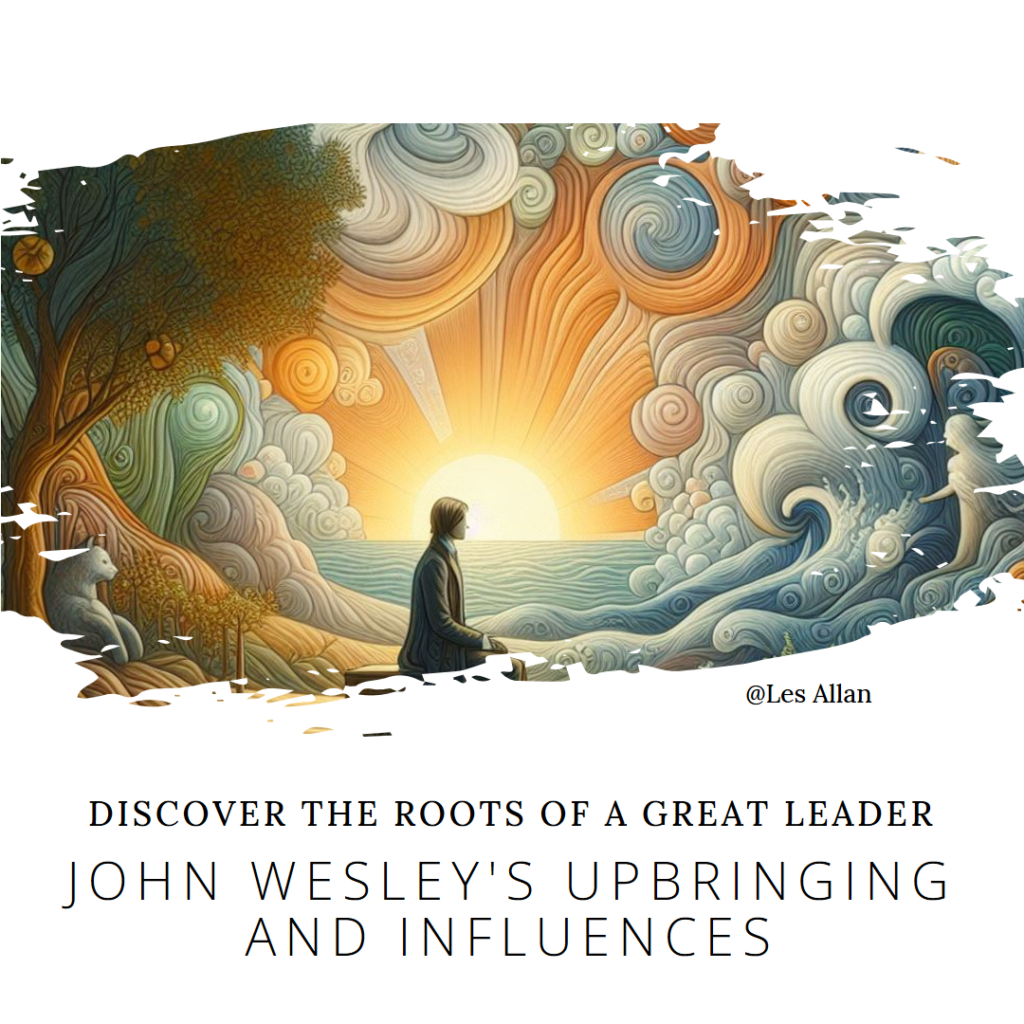
John Wesley, the founder of Methodism, was shaped by various factors in his early life that influenced his spiritual development. One of these factors was his family background, especially his mother, Susanna Wesley, who was a devout Anglican and a strong-willed woman. She taught John and his siblings the basics of Christian faith and practice and instilled in them a sense of discipline and piety. She also encouraged John to seek personal holiness and to follow his conscience. Susanna Wesley’s leadership through a difficult time, when her husband Samuel was absent for long periods due to his involvement in a political controversy, was an example of courage and conviction for John (Lovino, 2016).
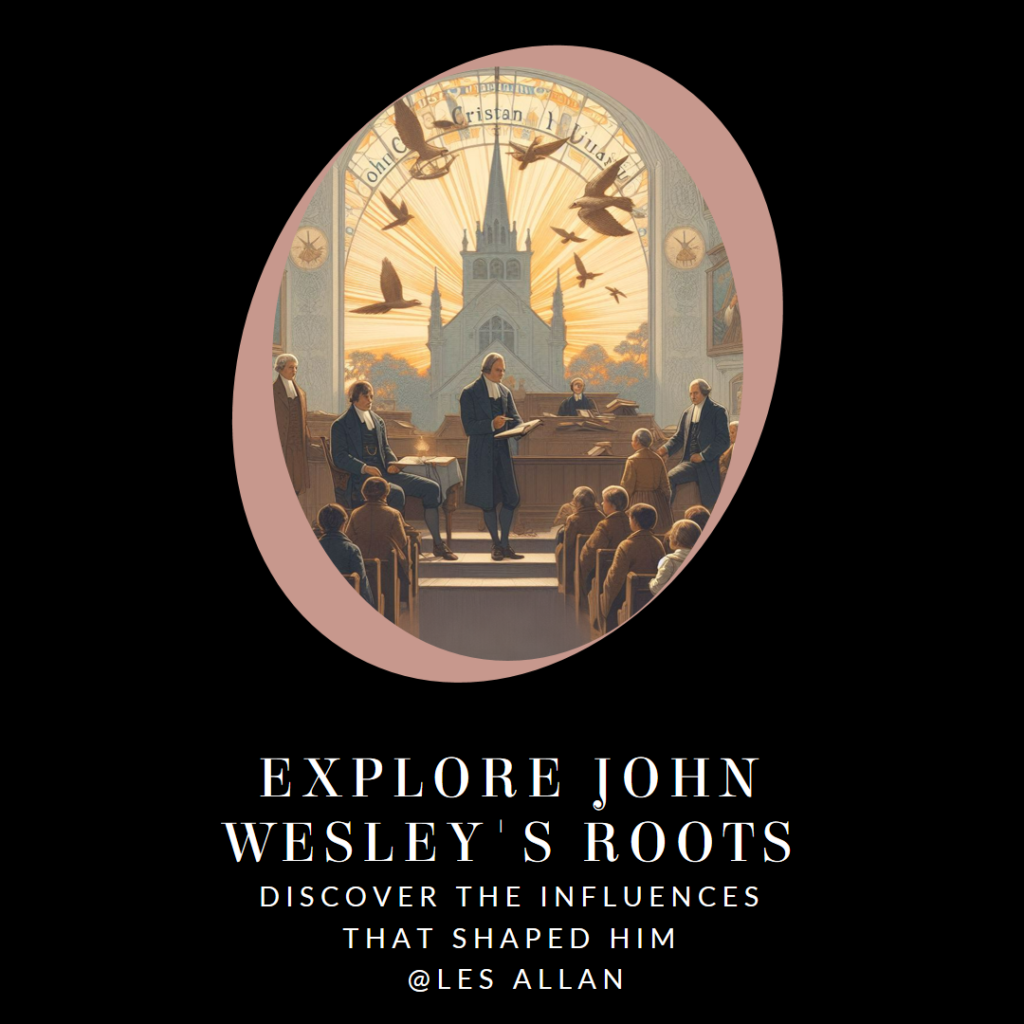
Another factor that influenced John Wesley’s spiritual development was his education at Oxford University, where he joined a group of like-minded students committed to religious study and devotion. Their peers called them the “Holy Club,” and they adhered to a stringent routine of prayer, fasting, Bible reading, and philanthropic deeds. They also sought to reform the Church of England from within by reviving its spiritual vitality and social relevance. John Wesley was the leader of this group, and he developed a methodical approach to religion that later gave rise to the name “Methodism” (Collins, 1999).
A third factor that influenced John Wesley’s spiritual development was his missionary experience in Georgia, where he became a chaplain to the colonists in 1735. He encountered various challenges and failures that tested his faith and ministry there. He also met some Moravian Christians who impressed him with their calmness and joy in facing persecution and hardship. They taught him about the doctrine of justification by faith alone and the need for an assurance of salvation. John Wesley realized that he lacked this assurance, and he began to question his own spiritual state. He returned to England in 1738, feeling depressed and disillusioned (Collins, 1999).
John Wesley’s conversion experience on May 24, 1738, was pivotal in his spiritual journey. Attending a Moravian meeting in Aldersgate Street, London, he was moved by reading Martin Luther’s preface to the Epistle to the Romans and felt his heart “strangely warmed.” In his journal, he recorded that he had put his trust in Christ alone for salvation and had received assurance that Christ had taken away his sins and that he had been saved from the law of sin and death (Wesley, 1738) (Manskar, 2013). This experience led to a lifelong dedication to preaching the gospel, organizing societies, and spreading Methodism throughout Britain and beyond (Collins, 1999), all fueled by the grace of God and the assurance of his own salvation.
It is indisputable that John Wesley, the founder of Methodism, was significantly influenced by his family background, education at Oxford University, and extensive missionary experience in Georgia. His mother, Susanna Wesley, taught him Christian faith and practice, instilling discipline and piety in him. At Oxford, he joined the “Holy Club,” a group committed to religious study and devotion, where he developed a methodical approach to religion, giving rise to “Methodism.” In Georgia, his faith underwent a rigorous test as he encountered Moravian Christians who taught him about the principle of justification by faith alone. This encounter led him to question his spiritual state. His conversion experience occurred on May 24, 1738, at a Moravian meeting in London, marking a turning point in his spiritual development. He then dedicated his life to preaching the gospel and spreading Methodism.
Blessings In Christ,
Lesallan
References:
Collins, K. J. (1999). A Real Christian: The Life of John Wesley. Abingdon Press.
Lovino, J. (2016, November 8). Courage and conviction: A woman’s leadership through a difficult time. The United Methodist Church. https://www.umc.org/en/content/courage-and-conviction-a-womans-leadership-through-a-difficult-time
Manskar, S. (2013, May 24). “I felt I did trust in Christ, Christ alone for salvation.” Discipleship Ministries. https://www.umcdiscipleship.org/blog/i-felt-i-did-trust-in-christ-christ-alone-for-salvation