Lesallan Bostron
Ohio Christian University
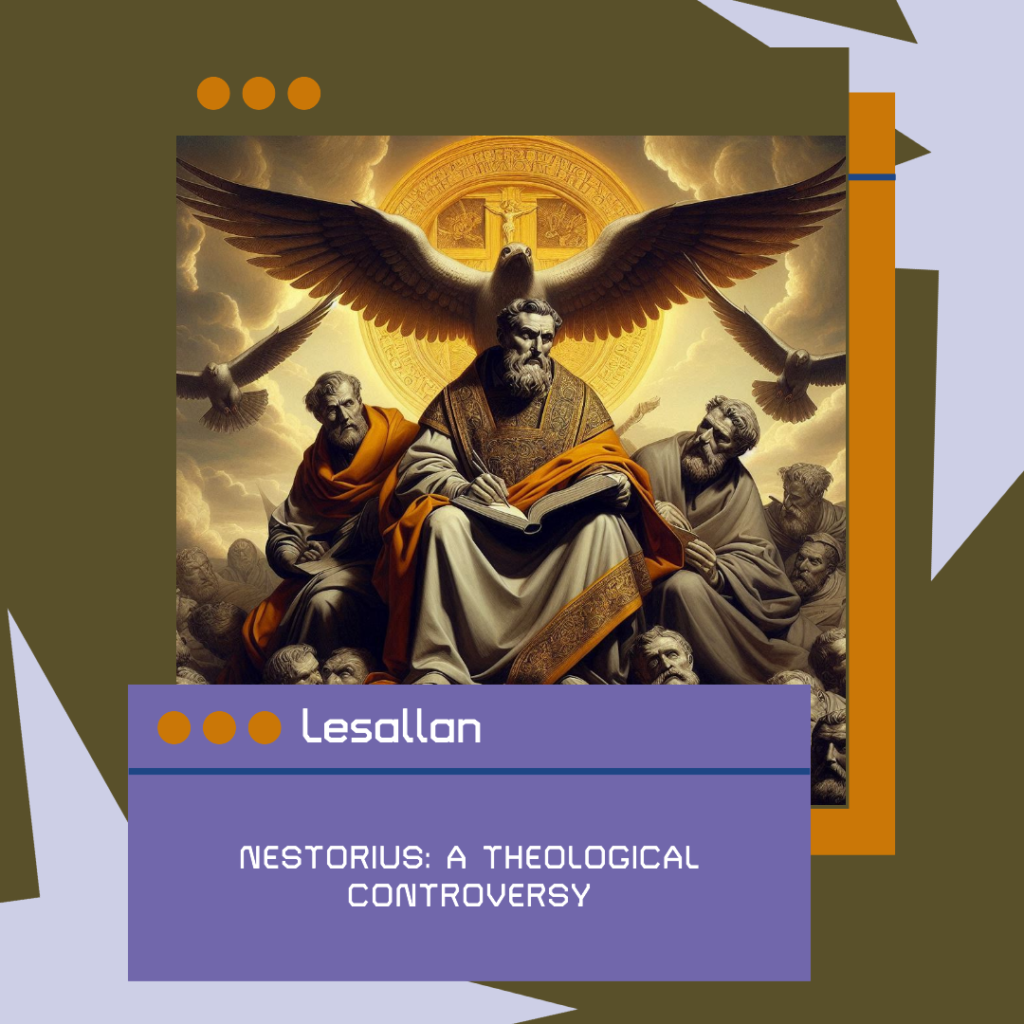
Nestorius: A Controversial Figure in Theological History
Nestorius, a prominent figure in the theological disputes of the Byzantine Empire, has always fascinated me. His teachings, which ultimately led to the formulation of the doctrine of Nestorianism, have profoundly impacted the history of Christianity (McGuckin, 2011). Nestorius served as the Archbishop of Constantinople and was known for his emphasis on the duality of Jesus Christ’s nature. This perspective sparked a major Christological controversy and led to the Council of Ephesus in 431, where Nestorius’ views were condemned as heretical. Despite this condemnation, his ideas continued to influence theological discourse and the development of Christian doctrine in both the East and West.
Nestorius, a prominent figure, served as the Archbishop of Constantinople from 428 to 431. He became known for promoting a controversial doctrine that would later be labeled Nestorianism. This doctrine stated that Jesus Christ had two distinct natures – one human and one divine, in contrast to the orthodox belief in a single nature that is fully human and fully divine. This theological difference led to intense debates and the convening of the Council of Ephesus in 431, where Nestorius was condemned as a heretic. His teachings continued to influence theological discussions and Christian thought for centuries to come. One of Nestorius’s most controversial teachings was his rejection of the title Theotokos (God-Bearer) for Mary, Jesus’ mother, indicating his preference for a loose prosodic union of the two natures of Christ over their full hypostatic union (McLeod, 2014).
Nestorius was known for his eloquence and unwavering commitment to his beliefs, which enabled him to propagate his teachings effectively. However, his insistence on a doctrine that diverged from the orthodox view ultimately led to his condemnation and deposition. This divergence sparked significant theological debate and controversy during the early Christian church, as Nestorius’ teachings clashed with established beliefs and traditions. Despite his strengths in communication and conviction, the discord over his doctrinal views ultimately led to his condemnation and removal from his position of influence within the church. (McGuckin, 2011).
The life of Nestorius serves as a compelling example of the significance of steadfastness in one’s convictions, particularly when confronted with challenges. However, it also underscores the importance of maintaining receptivity to alternative viewpoints and understandings, thereby promoting harmony rather than discord within the Christian context (McLeod, 2014).
As a prominent figure in early Christian history, Nestorius faced significant challenges when his theological views clashed with those of the established church. His determination to uphold his beliefs despite opposition highlights the courage and conviction required to stay true to one’s principles.
Moreover, Nestorius’ story powerfully reminds us of the need for open dialogue and understanding within the Christian community. By encouraging respectful discourse and seeking common ground, we can promote unity and cooperation despite differing viewpoints. Embracing diverse interpretations of faith can enrich our spiritual journey and contribute to a more inclusive and harmonious community.
In summary, Nestorius’ life and teachings provide valuable insights into the theological controversies of the Byzantine Empire. Despite facing condemnation and deposition, his commitment to his beliefs reminds us of the importance of standing firm in our convictions. At the same time, his life serves as a cautionary tale about the dangers of insisting on a single interpretation to the exclusion of all others.
References:
McGuckin, J. A. (2011). The Orthodox Church: An Introduction to its History, Doctrine, and
Spiritual Culture. Wiley-Blackwell.
McLeod, F. G. (2014). The Roles of Christ’s Humanity in Salvation: Insights from Theodore of
Mopsuestia. St. Vladimir’s Seminary Press.