Revelation 6:2
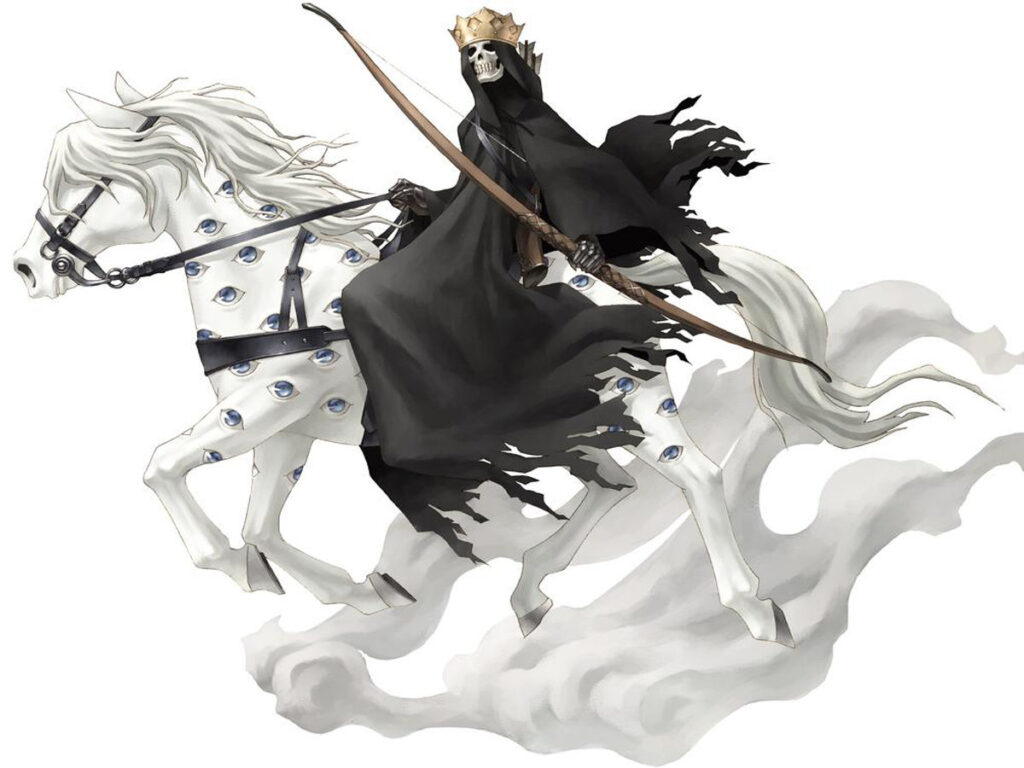
“And I saw, and behold a white horse: and he that sat on him had a bow; and a crown was given unto him: and he went forth conquering, and to conquer” (Revelation 6:2, KJV).
Revelation 6:2 Context:
1And I saw when the Lamb opened one of the seals, and I heard, as it were the noise of thunder, one of the four beasts saying, Come and see. 2And I saw, and behold a white horse: and he that sat on him had a bow; and a crown was given unto him: and he went forth conquering, and to conquer. 3And when he had opened the second seal, I heard the second beast say, Come and see. 4And there went out another horse that was red: and power was given to him that sat thereon to take peace from the earth, and that they should kill one another: and there was given unto him a great sword. 5And when he had opened the third seal, I heard the third beast say, Come and see. And I beheld, and lo a black horse; and he that sat on him had a pair of balances in his hand.
Good Afternoon:
Written in response to another student’s question, “Who is the rider on the white horse?”
In the sixth chapter of the Book of Revelation, yes, it is Satan who rides the white horse, trying to deceive and trick the world. The rider gives away his true identity as the Antichrist because, as you have stated, the rider has a bow, and “he is not intending to save or heal or to save anyone, but to destroy.” Through the imagery of the bow and specifically the word “crown” and further study of the original Greek text and other chapters in the Book of Revelation, one possible answer to your question of “Who is the rider on the white horse?” has been found.
There are two completely different views of who the rider on the white horse is in the Book of Revelation. Chapter six describes the rider as the Antichrist, while chapter nineteen describes the rider as Jesus, who is called Faithful and True and The Word of God. In addition, the rider of the white horse is given a “crown” (Revelation 6:2, ESV), which the Greek text refers to as “stephanos,” meaning a victor’s crown. While the rider in Revelation chapter nineteen wears a “diadem” (a royal crown). So, the riders on the white horses in Revelation, the ones in chapters six and nineteen, have different meanings and identities. This student then realized that the rider in Revelation chapter six is “given” a “crown” (Revelation 6:2, ESV).
Though it does not explicitly say who gave the rider the crown, it is implied that it was given by God, who gave the rider authority and power. The rider would seem to have received his crown from God’s Providence or permission, not from his works, deeds, or achievements. Some believe that the rider on the white horse is the Antichrist. Others believe this rider represents a spirit of conquest or war that will bring chaos and violence to the world. In either case, this is God’s will, and this is God’s plan and purpose for the final judgment of the world. The Book of Revelation describes this period of time as when God gives humanity yet another chance to make a choice.
Many Blessings!
Lesallan
#thechristianthing#lesallan#OhioChristianUniversity#ohiochristian