Lesallan | June 17, 2026
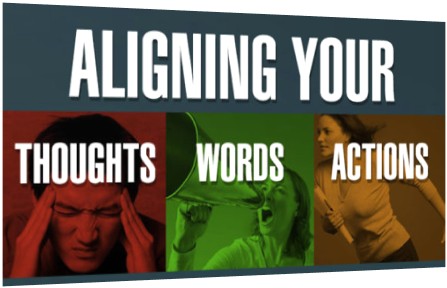
From Promise to Practice: Aligning Leadership Communication with Action
Aligning words with actions is a foundational principle of effective leadership communication. When leaders speak and then act consistently, they build credibility, foster trust, and create predictable environments where teams can perform confidently (Thomas, Haupt, & Spackman, 2017). The week’s multimedia resources reinforced that alignment requires clarity, brevity, and humility: communicating the point succinctly for executive audiences (Lee, 2022), admitting what you do not know and learning from others (Sinek, 2021), and using storytelling and structure to make messages memorable and actionable (Bluepoint Leadership Development, 2021; Ta, 2016). These sources, together with the textbook chapters on managerial communication, emphasize that words without follow-through are quickly discounted; actions are the evidence that gives words meaning (Thomas et al., 2017).
A personal example illustrates this alignment. In a previous role as project lead, I committed in a team meeting to prioritize a client’s urgent feature request and to reallocate two developers to that task within 48 hours. I followed the commitment by immediately updating the project plan, notifying the developers, and blocking their calendars for the sprint. I also sent a brief status note to the client confirming the timeline and the trade-offs we were making. The result was twofold: the client’s trust increased because they saw rapid, concrete movement, and the team felt respected because I had translated a verbal promise into a clear plan and visible actions. This sequence—promise, plan, execution, and communication—mirrors the guidance offered in the week’s videos: be concise with executives, be willing to be the least knowledgeable in the room and learn, and use structured narratives to connect intent to outcome (Lee, 2022; Sinek, 2021; Bluepoint Leadership Development, 2021; Ta, 2016).
Conversely, failing to align words with actions has predictable negative consequences. Broken promises erode psychological safety and reduce willingness to take risks; team members become skeptical of commitments and may withhold effort or initiative (Thomas et al., 2017). Externally, stakeholders lose confidence, which can damage reputation and lead to lost opportunities. Practically, misalignment creates inefficiency: time is wasted clarifying expectations, redoing work, and repairing relationships. The literature underscores that credibility is cumulative and fragile—each unfulfilled statement subtracts from a leader’s social capital (Thomas et al., 2017). Leaders who habitually overpromise and underdeliver also model poor standards for the organization, normalizing inconsistency.
In sum, aligning words with actions is not merely ethical; it is strategic. Clear, concise communication combined with deliberate follow-through builds trust, improves performance, and sustains relationships with both internal and external stakeholders. The week’s readings and videos provide both the rationale and practical techniques—be succinct for executive audiences, remain curious and humble, and structure messages so that commitments are explicit and verifiable (Lee, 2022; Sinek, 2021; Bluepoint Leadership Development, 2021; Ta, 2016; Thomas et al., 2017). Practicing this alignment has been central to my effectiveness as a leader and remains a daily discipline.
—Lesallan
References:
Bluepoint Leadership Development. (2021, August 10). The key to powerful leadership communication [Video]. YouTube. https://www.youtube.com/watch?v=em6EJ7-MFcw
Lee, G. (2022). 5 rules for communicating effectively with executives [Video]. YouTube. https://www.youtube.com/watch?v=Fzi4T94QCjw
Sinek, S. (2021). The truth about being the “stupidest” in the room | Simon Sinek [Video]. YouTube. https://www.youtube.com/watch?v=BkLzo_oNVho
Ta, V. (2016). Communication in the 21st century: Is it what you say, not how you say it? | TEDxUTA [Video]. YouTube. https://www.youtube.com/watch?v=laDnZ_FWyhM
Thomas, L., Haupt, J., & Spackman, A. (2017). Management communication. Open Textbook Library. https://open.umn.edu/opentextbooks/textbooks/management-communication
