Written by Lesallan – February 28, 2024
Gender and Leadership: Contemporary Examination
Lesallan Bostron
Ohio Christian University
LDR3200 Organization Leadership (ONLSP24)
Dr. James Leak III
February 28, 2024
Gender and Leadership: Contemporary Examination
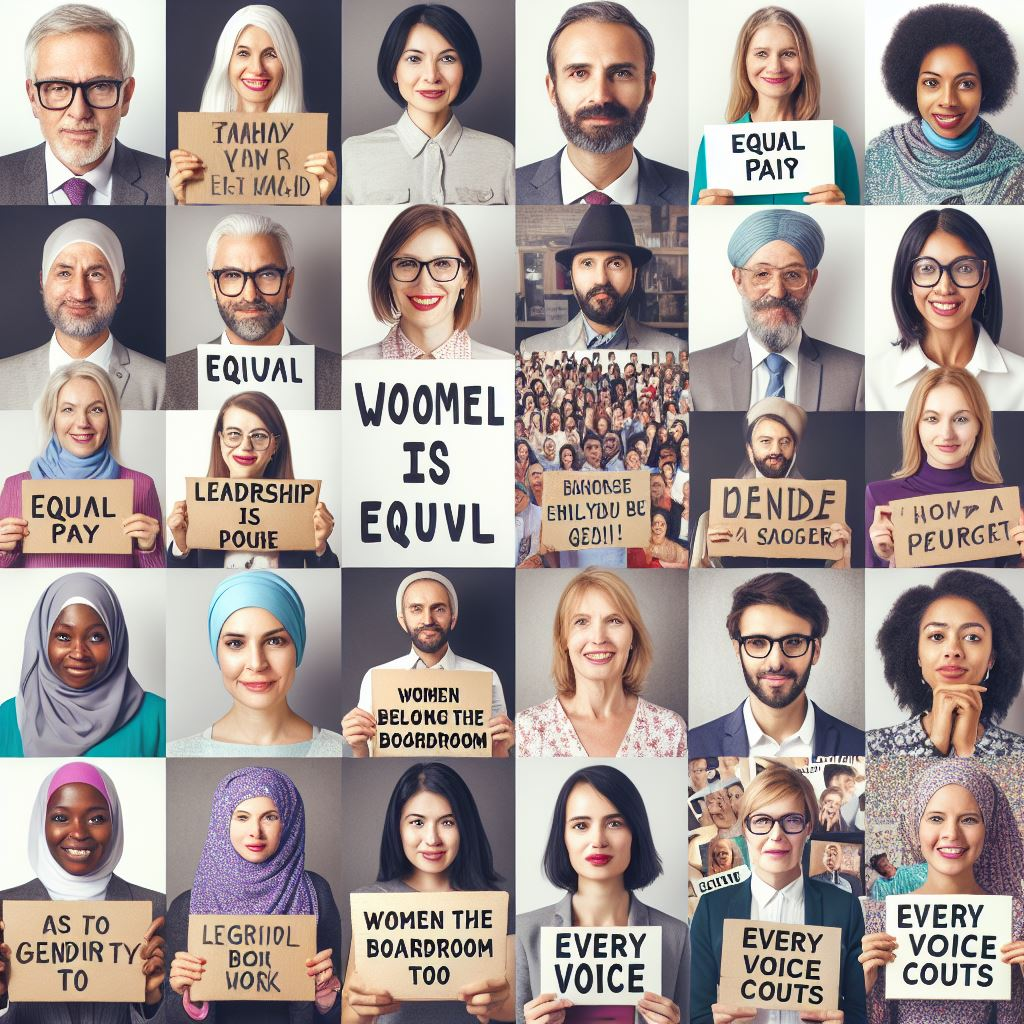
Extensive research has explored the correlation between leadership and gender. It is paramount for leaders to comprehend the distinctive values, talents, and gifts that each gender contributes. Notwithstanding noteworthy advancements, gender-related challenges in leadership continue to exist in our contemporary world.
In many organizational structures, traditional gender roles tend to surface. However, it is crucial to move beyond these roles and appreciate the unique strengths and abilities of all individuals. Northouse (2016) pointed out that women hold over 50% of management and professional positions in American companies, emphasizing the significance of examining and comparing gender and leadership in contemporary society.
From a Biblical perspective, gender and leadership must be viewed from various angles. While progress has been made in recent decades, gender parity in leadership remains a significant challenge. It is worth noting that women currently earn over 57% of bachelor’s degrees, 60% of master’s degrees, and more than half of doctoral degrees, according to the U.S. Census Bureau (2022) and the U.S. Bureau of Labor Statistics (2017). However, they hold only 4% of the top CEO positions in the United States (World Economic Forum, 2022; Women’s Business Collaborative, 2021). Despite the progress made, prejudice in the workplace about gender and leadership remains a significant issue. Research indicates that gender bias persists even in female-dominated workplaces (Loving Christ Ministries, n.d.). Women, especially those from marginalized groups, continue to face barriers to leadership positions and are likely to encounter microaggressions.
Two common stereotypes concerning gender and leadership include the perception that leadership traits are inherently masculine and the belief that women in leadership roles are either too soft or too rigid. These stereotypes can hinder the advancement of women in leadership (BibleRef.com, n.d.); When You Need (God, n.d.).
The Bible does offer various perspectives on women in leadership roles. Galatians 3:28 (NIV) states, “There is neither Jew nor Gentile, neither slave nor free, nor is there male and female, for you are all one in Christ Jesus.” This verse suggests that in the eyes of God, all are equal, irrespective of gender. However, specific passages, such as 1 Timothy 2:12, have been interpreted to limit women’s roles in leadership (Bible Hub, n.d.; StudyLight.org, n.d.). It is important to note that interpretations vary, and many believe the Bible does support women in leadership.
In summary, understanding the context, insight, and reality of gender in leadership is crucial for any leader. It is imperative to acknowledge that despite the progress, there is still a long way to go in ensuring equality in leadership roles across all genders. It is widely recognized that gender prejudice and stereotypes persist in the workplace and in leadership roles, despite the need for neutrality. Studies and surveys have shown that gender bias can influence perceptions of leadership, often to the detriment of women. Two common stereotypes include the perception that men are more decisive leaders while women are seen as more nurturing and less assertive. These stereotypes can limit opportunities for women and create a skewed representation in leadership roles. It is crucial for society to continue challenging these biases and stereotypes to foster a more inclusive and equitable environment.
Blessings,
Lesallan
References:
Bible Hub. (n.d.). 1 Timothy 2:12. https://biblehub.com/commentaries/1_timothy/2-12.htm
BibleRef.com. (n.d.). What does 1 Timothy 2:12 mean?
https://www.bibleref.com/1-Timothy/2/1-Timothy-2-12.html
Loving Christ Ministries. (n.d.). What does the Bible say about women in leadership?
https://lovingchristministries.com/women-in-leadership/
Northouse, P. G. (2016). Leadership: Theory and practice (7th ed.). Sage Publications.
StudyLight.org. (n.d.). 1 Timothy 2:12 – Verse-by-verse Bible commentary.
https://www.studylight.org/commentary/1-timothy/2-12.html
U.S. Census Bureau. (2022). Educational attainment in the United States: 2021.
https://www.census.gov/newsroom/press-releases/2022/educational-attainment.html
U.S. Bureau of Labor Statistics. (2017). A look at women’s education and earnings since the
1970s. https://www.bls.gov/opub/ted/2017/a-look-at-womens-education-and-earnings-since-the-1970s.htm
When You Need God. (n.d.). What is the REAL meaning of 1 Timothy 2:12?
(Deep dive – Bible study commentary). https://whenyouneedgod.com/what-is-the-real-meaning-of-i-timothy-212-deep-dive-bible-study-commentary/
Women’s Business Collaborative. (2021). 8.2% of Fortune 500 CEOs are women, according to
the 2021 Women CEOs in America report. 8.2% of Fortune 500 CEOs are Women, According to the 2021 Women CEOs in America Report – Women Business Collaborative (wbcollaborative.org)
World Economic Forum. (2022). Only 15 percent of CEOs at fortune 500 companies are female.
https://www.weforum.org/agenda/2022/03/ceos-fortune-500-companies-female/