Lesallan
Ohio Christian University
MIS1010 Introduction to Global Missions (ONL25F4)
November 22, 2025
Scaffold and Spirit: Carey & the Moravians
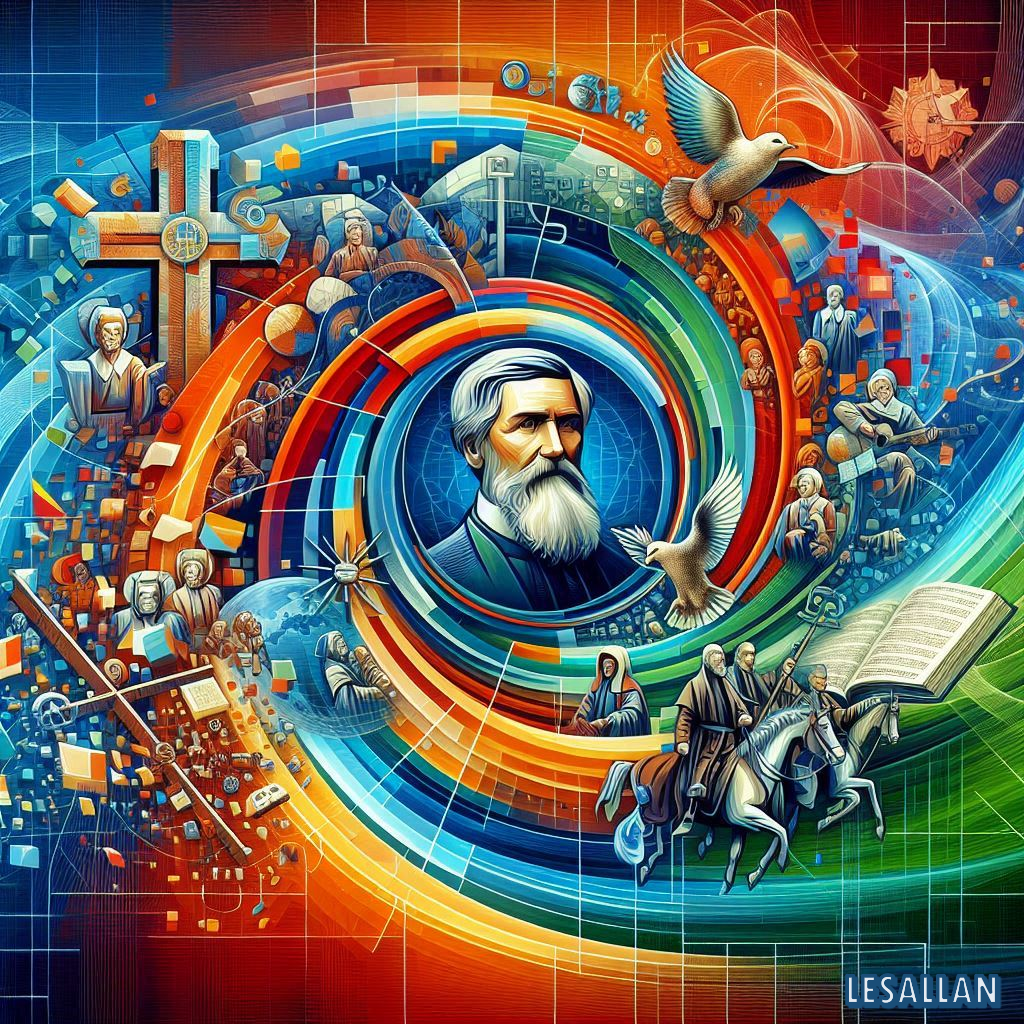
William Carey and the Moravian missionaries decisively shaped modern Protestant mission through complementary but divergent theological emphases, methods, and legacies. Carey advanced an institutional, education-centered paradigm that paired evangelical urgency with disciplined intellectual labor; the Moravians embodied a Spirit-led, communal sending that mobilized lay believers through sustained prayer, relational formation, and apprenticeship-style outreach. Together, they expanded the church’s imagination of faithful cross-cultural witness.
Carey’s strategy insisted that Christian proclamation be paired with learned preparation and social engagement. He argued believers should “expect great things; attempt great things,” pressing for organized societies, language study, translation, printing, schools, and social reform as essential to durable evangelization (Tucker, 1983). Carey’s work at Serampore exemplifies this program: living long-term in India, he mastered local languages, undertook extensive translation projects, established printing presses, and cofounded Serampore College to combine theological and secular education for local benefit (Tucker, 1983; The Incredible Journey, 2023). Contemporary case studies show that Carey’s model of professionalized missionary practice and linked evangelism was linked to scholarly preparation and institutional structures (Howell, 2023).
By contrast, the Moravian model rooted mission in a sustained communal piety and the conviction that ordinary Christians could be sent. Originating at Herrnhut, the Moravian sending emphasized constant prayer, mutual accountability, and decentralized networks that dispatched lay missionaries—including women and artisans—into contexts such as the Caribbean and Greenland (Canberra Declaration, 2022; Bosch, 2011). Their apprenticeship-style formation privileged lived holiness and relational discipleship over formal seminary training, demonstrating how small-commune spiritual life could produce wide missionary mobilization (Bosch, 2011).
Methodological differences shaped responses to similar challenges. Carey confronted disease, financial scarcity, and cultural misunderstanding by building local partnerships, printing infrastructure, and educational institutions that enhanced resilience and contextual competence (Tucker, 1983; The Incredible Journey, 2023). The Moravians mitigated attrition and isolation through communal care systems and intensive prayer rhythms that sustained missionaries emotionally and spiritually (Canberra Declaration, 2022). Both approaches had limits: Carey’s institutional orientation could, in colonial contexts, verge toward paternalism, while the Moravians’ reliance on spiritual interpretation sometimes underemphasized structural injustices—points stressed by later missiological critics and historians (Bosch, 2011).
For contemporary ministries and grassroots ministries, a hybrid posture is especially fruitful. The Moravian emphasis on lay mobilization and prayer provides a model for forming and sending ordinary Christians without waiting for full professionalization; Carey’s insistence on language learning, translation, and educational engagement insists on contextual literacy and the dignity of local partners (Howell, 2023; Canberra Declaration, 2022). Combining Spirit-formed communal sending with disciplined institutional preparation responds to the Great Commission’s double mandate to go and to teach (Matthew 28:19-20).
In summary, Carey and the Moravians together supply both an intellectual-institutional scaffold and a spiritual-relational engine for mission. Integrating their strengths produces a historically grounded, theologically balanced framework for faithful cross-cultural witness today.
References:
Bosch, D. J. (2011). Transforming Mission: Paradigm Shifts in Theology of Mission (20th Anniversary Edition). Orbis Books.
Canberra Declaration. (2022, June 16). The Moravian Missionary Movement & their Impact on John Wesley | Dr Jason Hubbard. YouTube. https://www.youtube.com/watch?v=In5Ro27ejPQ
Howell, A. (2023). Seven case studies from the life of William Carey. Missio Dei Journal. https://missiodeijournal.com/issues/md-14/authors/md-14-howell
The Incredible Journey. (2023, March 9). William Carey: Father of Modern Missions. YouTube. https://www.youtube.com/watch?v=c23ENpavMPQ
Tucker, R. (1983). From Jerusalem to Irian Jaya: a biographical history of Christian missions. Zondervan.