Lesallan | July 30, 2025
The Enduring Message of the Book of Job
Lesallan | July 30, 2025
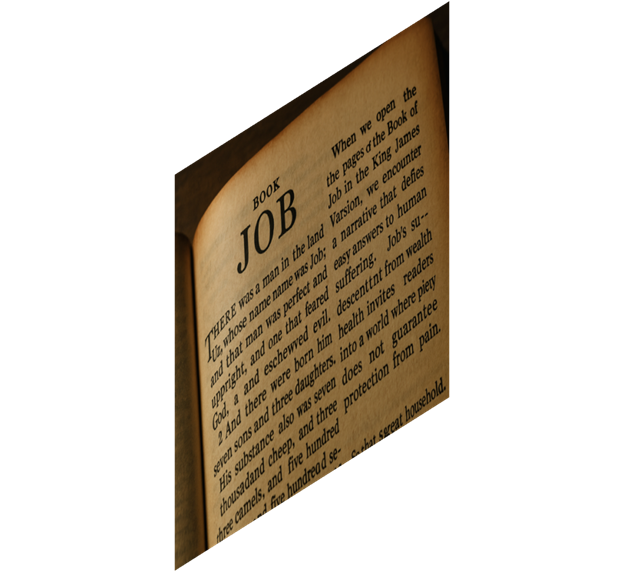
When we open the pages of the Book of Job in the King James Version, we encounter a narrative that defies easy answers to human suffering. Jobs’ sudden descent from wealth and health invites readers into a world where piety does not guarantee protection from pain. Through a blend of prose and poetry, the text wrestles with the tension between divine sovereignty and human experience, prompting us to examine our own assumptions about justice, faith, and the nature of God’s involvement in the affairs of humankind.
Literary Structure of the Book of Job
The Book of Job begins with a prose prologue (Job 1–2) and concludes with an epilogue that mirrors the opening (Job 42:7–17), framing the central poetic dialogues between Job and his three friends—Eliphaz, Bildad, and Zophar. This chiastic structure underscores the movement from innocence through accusation to restoration (Job 1:1–5 KJV). The juxtaposition of prose and poetry highlights both the narrative drive and the emotional intensity of the arguments about suffering and divine justice.
Themes of Suffering and Divine Sovereignty
A central theme in Job is the inscrutable nature of God’s governance. Job repeatedly protests his innocence, demanding to know why the righteous suffer (Job 24:1–12 KJV). His friends attempt to fit his misery into a retributive framework, insisting that suffering is always the result of sin. However, God’s response from the whirlwind (Job 38–41 KJV) reframes the discussion, pointing to the vastness of divine wisdom and the limits of human understanding (Clines, 1989).
Poetic Dialogues and Rhetorical Techniques
The poetic chapters employ rich imagery and rhetorical questions to convey Job’s anguish and the friends’ theological assumptions. Job’s laments (e.g., Job 3:3–26 KJV) use parallelism and chiasmus to emphasize his despair, while God’s speeches employ vivid descriptions of creation (e.g., Leviathan in Job 41:1–34 KJV) to assert divine supremacy. These literary devices deepen the reader’s engagement with the text’s existential questions.
Theodicy and Theological Implications
Job’s journey challenges simplistic theodicies by illustrating that suffering cannot always be traced to personal fault. Instead, the narrative invites a stance of humility before divine mystery. The restoration of Job’s fortunes at the end (Job 42:10–17 KJV) does not negate his suffering but completes the story of faith tested and faith affirmed. Job emerges as a paradigm of perseverance and trust in God’s overarching purpose.
Closing Reflection
In the Book of Job, we see a realistic portrayal of human suffering set against a backdrop of divine majesty. The text does not resolve every perplexity but invites believers into a posture of awe, patience, and trust. As readers, we are reminded that faith is not the promise of painlessness but the confidence that God’s wisdom, though often hidden, guides the universe for purposes ultimately beyond our comprehension. Blessings.
References
Clines, D. J. A. (1989). Job 1–20: A commentary. Westminster John Knox Press.
The Holy Bible: King James Version. (1769). Cambridge University Press.