Lesallan
August 3, 2025
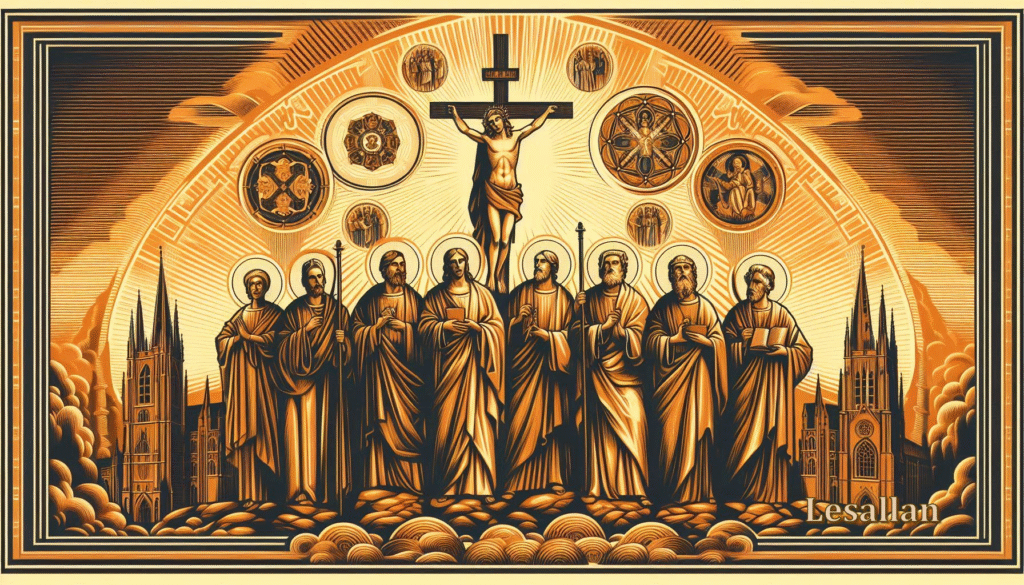
Tracing the Threads of Faith: Christianity from the Great Schism to Contemporary American Practice
Introduction
Christianity’s development from the East-West Schism in 1054 to the present day reflects a complex tapestry of theological, cultural, and institutional changes. Originating from the Great Schism, the church’s later divisions and renewals—most prominently exemplified by the Protestant Reformation—redefined Western Christendom and laid the groundwork for modern denominationalism (Shelley, 2013). As global Christianity extends beyond its European origins, it is essential to understand these historical developments to contextualize contemporary American faith communities and inform effective ministry practices (Jenkins, 2011; Ohio Christian University, 2025).
The Great Schism and Protestant Reformation
The schism of 1054 formalized the long-standing doctrinal and liturgical divergences between the Roman Catholic and Byzantine branches of the Church. This rupture established a precedent for future challenges to ecclesiastical authority and set the stage for subsequent reform movements. Five centuries later, figures such as Martin Luther and John Calvin challenged medieval ecclesiology and sacramental theology, leading to the Protestant Reformation. Their critiques of indulgences and interpretations of Scripture gave rise to new confessions, redefined the roles of clergy, and democratized access to the Bible (Shelley, 2013).
Modern Denominationalism and Global Christianity
The post-reformation period in Europe saw a flourishing of various denominational identities—such as Anglican, Presbyterian, Anabaptist, and others—each presenting unique doctrinal focuses and forms of worship (Shelley, 2013). By the nineteenth and twentieth centuries, missionary efforts spread these diverse expressions of Christianity across the globe, leading to a rich tapestry of global faith. Philip Jenkins posits that the “next Christendom” is shifting towards the Global South, where Pentecostal and charismatic movements are emerging as the fastest-growing branches of Christianity (Jenkins, 2011).
The Development of American Christianity
The evolution of American Christianity reflects a combination of inherited traditions and innovative adaptations. From the puritanical foundations of New England to the evangelical awakenings on the frontier, expressions of faith in the United States have sought to balance doctrinal fidelity with experiential piety. Prominent revivalist figures such as Jonathan Edwards and Charles Finney emphasized personal conversion and social reform, influencing denominational networks and the establishment of educational institutions. In the twentieth century, ecumenical dialogues and interdenominational collaborations further enriched the American religious landscape (Shelley, 2013; Ohio Christian University, 2025).
Wesleyan Influences on Western Civilization and Ministry Context
John Wesley’s focus on holiness, social engagement, and systematic small groups had a major influence on both the development of denominational structures and grassroots ministry. Wesleyan theology promoted disciplined spiritual practices—such as prayer, Scripture reading, and accountability—that informed various social initiatives, including education and healthcare. Contemporary movements influenced by Wesleyan thought continue this tradition by incorporating historical insights into modern ministry strategies, urging leaders to connect faithful orthodoxy with tangible acts of compassion (Ohio Christian University, 2025).
Conclusion
Tracing the trajectory of Christianity from the schism of 1054 through the Reformation to contemporary American expressions illustrates a faith that is consistently reforming itself. Understanding the influential figures, pivotal events, and theological movements enables ministry leaders to respect tradition while effectively engaging with the ever-evolving cultural landscapes. As global Christianity progresses into new contexts, anchoring ministry in these historical foundations ensures both fidelity to its roots and relevance in addressing the challenges of our time.
Blessings,
Lesallan
References:
Jenkins, P. (2011). The next Christendom: The coming of global Christianity (3rd ed.). Oxford University Press.
Ohio Christian University. (2025). History of Christianity from the Great Schism to the present [Online course syllabus]. Retrieved from https://www.ohiochristian.edu
Shelley, B. L. (2013). Church history in plain language (4th rev. ed.). Thomas Nelson.