Lesallan
Ohio Christian University
MIS1010 Introduction to Global Missions (ONL25F4)
Professor Davis
November 29, 2025
Youth With A Mission: Incarnational Discipleship, Cultural Sensitivity, and Global Impact
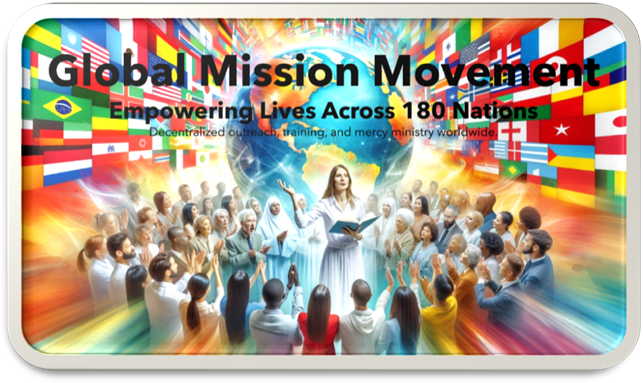
Youth With A Mission [YWAM] (2025b) began as a vision from Loren Cunningham in 1956 and was formally organized in 1960 (Youth With A Mission, 2024). Today, YWAM describes itself as a decentralized global movement focused on evangelism, training, and mercy ministry, with staff and volunteers operating in over 180 countries (Youth With A Mission, 2025b). YWAM’s primary methods—short-term outreach teams, Discipleship Training Schools (DTS), and locally led bases—enable rapid mobilization and contextual ministry; these methods intentionally combine spiritual formation with practical service, reflecting a missional pedagogy that trains participants for cross-cultural engagement (Bosch, 2011; Tucker, 1983; Youth With A Mission, 2025c).
YWAM’s stated vision, “To know God and to make Him known,” shapes both strategy and theology and is grounded in evangelistic urgency reflected in Romans 10:9–15 and Paul’s incarnational approach in 1 Corinthians 9:19–23 (New International Version, 2011, Rom. 10:9–15; New International Version, 2011, 1 Cor. 9:19–23). The movement frames mission as holistic: proclamation paired with mercy ministries (education, healthcare, anti‑trafficking, arts), which aligns with contemporary missiological shifts toward mission as reconciliation and social transformation (Bosch, 2011; Youth With A Mission, 2025a).
Cultural sensitivity is emphasized across YWAM training and values: their materials call for listening, contextualization, and partnership with local churches rather than imposing Western forms (Youth With A Mission, 2025a). YWAM’s history pages acknowledge learning from earlier missionary mistakes and stress adapting methods to local cultures while maintaining doctrinal convictions (Tucker, 1983; Youth With A Mission, 2025c). Scholars who examine incarnational mission caution that incarnational presence must be practiced with humility, attention to power dynamics, and a guest-oriented posture to avoid paternalism; this critical perspective supports YWAM’s stated focus on listening and partnership while encouraging ongoing reflexivity among practitioners (van den Toren,‑Lekkerkerker, & van den Toren, 2015).
YWAM’s global impact is clear in its widespread network of bases and diverse ministries, from ship-based medical teams to business and arts initiatives, which enable sustained local engagement and rapid disaster response (Youth With A Mission, 2025b). Historically, YWAM builds on the legacy of earlier missionary movements—borrowing the zeal and mobilization patterns of 19th-century pioneers while innovating with youth mobilization, decentralized governance, and short-term training models (Tucker, 1983; Youth With A Mission, 2025c). This continuity and adaptation illustrate how contemporary movements can honor past commitments while responding to globalization and youth culture.
YWAM stands for a significant contemporary expression of Christian mission: methodologically flexible, theologically rooted, culturally attentive, and globally impactful. Its emphasis on discipleship, contextualization, and mercy ministries shows both fidelity to biblical mandates and an evolution beyond earlier missionary paradigms, offering a model of mission that combines proclamation with compassionate service across diverse cultural settings. Scholarly critique of incarnational approaches underscores the importance of humility and partnership in practice, reinforcing the need for ongoing reflection as YWAM and similar movements engage cross-culturally (van den Toren‑Lekkerkerker & van den Toren, 2015).
References:
Bosch, D. J. (2011). Transforming mission: Paradigm shifts in the theology of mission (20th anniversary ed.). Orbis Books.
New International Version. (2011). Holy Bible: New International Version. Zondervan.
Tucker, R. (1983). From Jerusalem to Irian Jaya: A biographical history of Christian missions. Zondervan.
van den Toren‑Lekkerkerker, B., & van den Toren, B. (2015). From missionary incarnate to incarnational guest: A critical reflection on incarnation as a model for missionary presence. Transformation: An International Journal of Holistic Mission Studies, 32(2), 81–96. https://doi.org/10.1177/0265378814562824
Youth With A Mission. (2024, August 29). Legacy Word #1: The vision of the waves. Youth With A Mission. https://ywam.org/legacy-word-1-the-vision-of-the-waves
Youth With A Mission. (2025a). The statement of purpose, core beliefs and foundational values of YWAM. Youth With A Mission. https://ywam.org/about-us/values
Youth With A Mission. (2025b). Who we are. Youth With A Mission. https://ywam.org/about-us
Youth With A Mission. (2025c). YWAM history. Youth With A Mission. https://ywam.org/about-us/history