Written by Lesallan – December 23, 2023
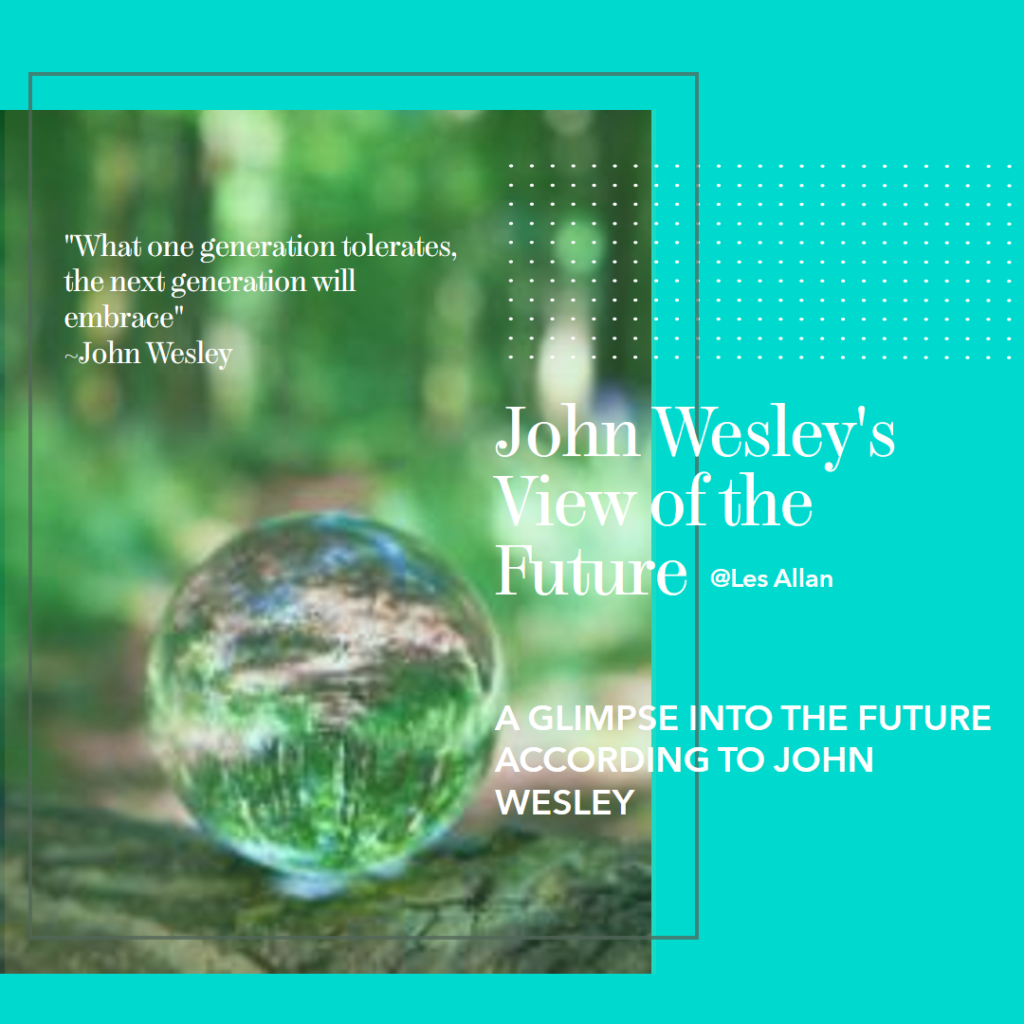
John Wesley was a prominent 18th-century theologian and the founder of Methodism. He had a lot to say about the future, especially in relation to God’s plan for salvation and the end times. Here are some of his main views:
Wesley believed that God’s ultimate purpose for creation was to fill it with his glory and love. He saw history as a progressive unfolding of God’s grace, leading to the restoration of all things in Christ. He also anticipated a future revival of Christianity that would spread worldwide and prepare the way for Christ’s return (Patterson, 2020).
Wesley held a postmillennial view of eschatology, meaning he expected a long period of peace and righteousness before the final judgment and resurrection. He based this on his interpretation of Revelation 20, where he understood Christ’s thousand-year reign and the saints as symbolic of the church age (Admin, 2021).
Wesley also affirmed the doctrine of the general resurrection, where all the dead will be raised and judged according to their deeds. He taught that there will be degrees of reward and punishment in the afterlife, depending on the quality of one’s faith and works. He also believed that some sinners may be saved after death through God’s mercy (Wesleyan-Holiness Theology, 2023).
Wesley was interested in the signs of the times and the prophecies of the Bible, but he was cautious not to speculate too much or set dates for the end. He urged his followers to be ready for Christ’s coming at any moment and to live holy and fruitful lives in the present (Sample, 2012).
I hope this gives you a brief summary of John Wesley’s theology of the future. You can check out the links I provided in the references section if you want to learn more.
Lesallan
References:
Admin. (2021, March 1). From the Beginning to the End: John Wesley’s Doctrine of Creation. Wesleyscholar.com. https://wesleyscholar.com/from-the-beginning-to-the-end-john-wesleys-doctrine-of-creation/
Patterson, J. (2020, August 31). John Wesley and the End Times: What Our Founder Thought About the Thousand-Year Reign. Firebrand Magazine. https://firebrandmag.com/articles/john-wesley-and-the-end-times
Sample, T. (2012). The Future of John Wesley’s Theology. Wipf and Stock Publishers.
Wesleyan-Holiness Theology. (2023). Wesleyan-Holiness Theology. Asbury University. https://www.asbury.edu/about/spiritual-vitality/wesleyan-holiness-theology/