Lesallan
Independent Devotional Reflection
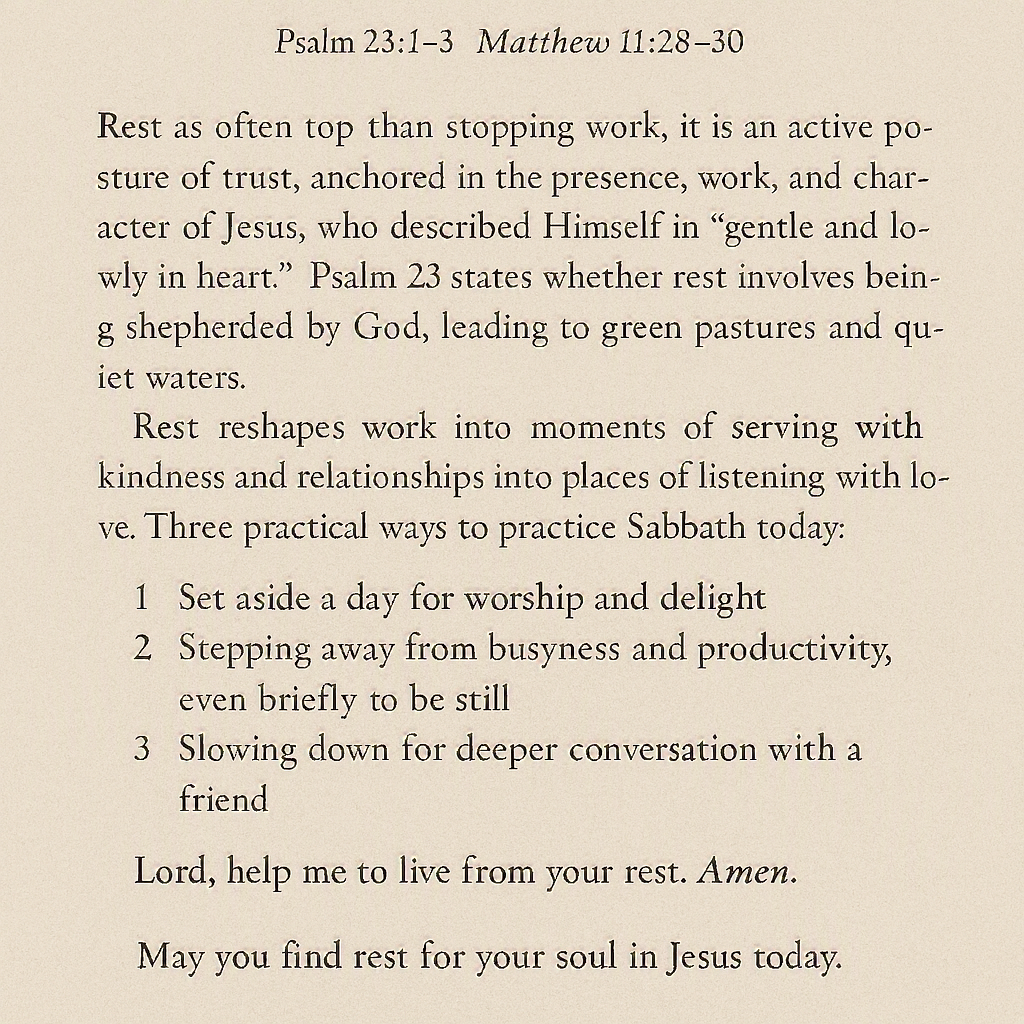
Sunday Devotional — July 19, 2026
Rest and Restoration: A Sunday Devotional — July 19, 2026
Lesallan
Independent Devotional Reflection
Abstract
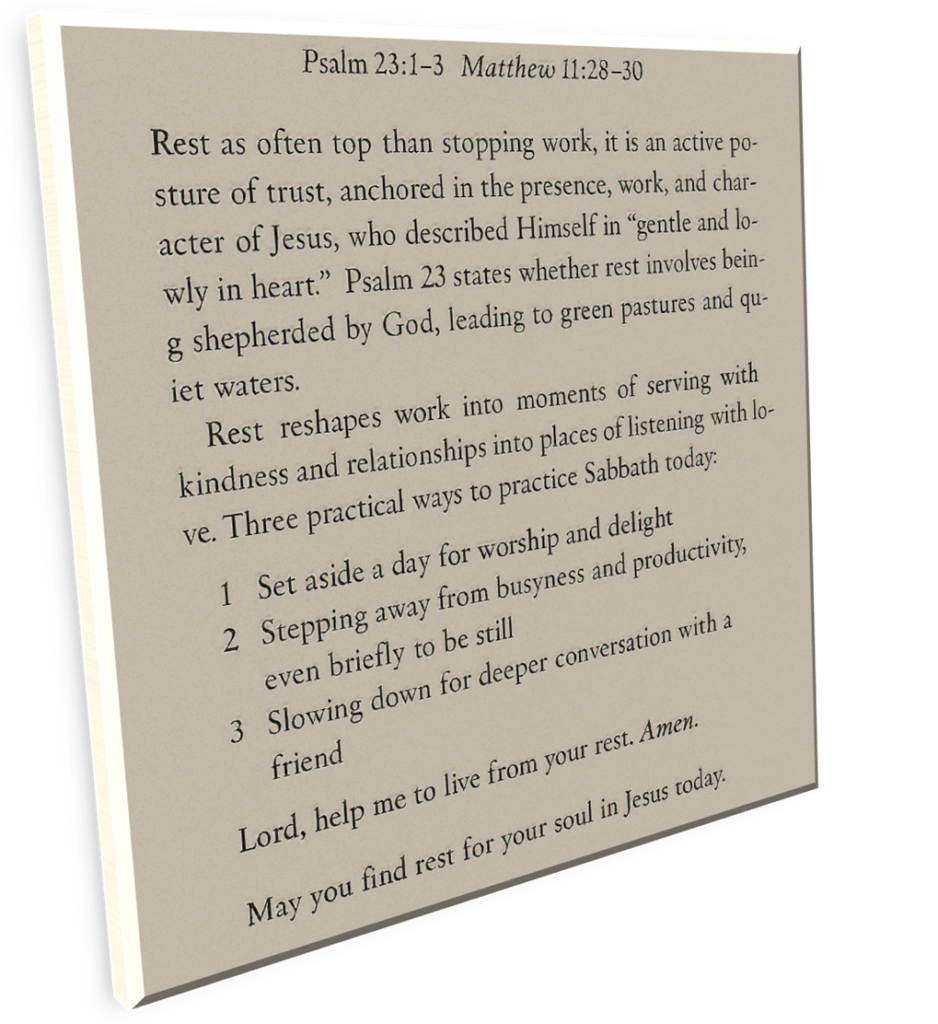
This devotional reflects on the theme of spiritual rest, drawing on Psalm 23:1–3 and Matthew 11:28–30. It explores rest as an active posture of trust, how rest reshapes work and relationships, and offers three practical practices for observing Sabbath rest today. A brief prayer and closing blessing conclude the piece.
Psalm 23:1–3
The Lord is my shepherd; I lack nothing. He leads me to places of rest and restores my soul; he guides me along right paths for his name’s sake (New International Version [NIV], 2011, Ps. 23:1–3).
Matthew 11:28–30 (paraphrase). Come to me, all who are weary and burdened, and I will give you rest. Take my yoke and learn from me; my burden is light (NIV, 2011, Matt. 11:28–30).
Reflection
Rest is not passive; it is trust.
When the shepherd leads the sheep to still waters, the animals do not have to manufacture peace — they simply follow. In the same way, our rest begins when we stop trying to carry what God never intended us to carry alone. Rest is a spiritual posture: surrendering control, receiving care, and allowing God’s rhythm to restore our souls (NIV, 2011, Ps. 23:1–3).
Rest reshapes our work.
Sabbath rest does not remove responsibility; it reorders it. When we are restored, our decisions, relationships, and service flow from abundance rather than scarcity. The invitation in Matthew is practical: learn from Jesus’ gentleness and humility so that our daily labor becomes an expression of grace, not a frantic attempt to prove our worth (NIV, 2011, Matt. 11:28–30).
Application
Three simple practices for today
- Begin with five minutes of silence. Sit, breathe, and name one thing you’re carrying. Offer it to God and listen for a single word of comfort (NIV, 2011, Ps. 23:1–3).
- Choose one small mercy. Make a phone call, send a short note, or offer a kind word to someone who might be tired today. Let compassion be your Sabbath work.
- Set a boundary. Turn off one device for a block of time (an hour or more). Protect space for prayer, reading, or a walk where you notice God’s presence in creation.
Prayer
Lord, you are my shepherd. I bring my weariness and my striving to you. Restore my soul and teach me to rest in your care. Help me to walk in your paths today, to show mercy, and to receive your peace. Amen (NIV, 2011, Ps. 23:1–3; Matt. 11:28–30).
Closing Blessing
May you walk into this week lighter, guided by a shepherd who knows your name. Go with the quiet confidence that rest is a gift and obedience a joyful response.
References:
American Psychological Association. (2020). Publication manual of the American Psychological Association (7th ed.). American Psychological Association.
The Holy Bible, New International Version. (2011). Zondervan.
APA Style. (n.d.). Religious works. https://apastyle.apa.org/style-grammar-guidelines/references/examples/classical-works-references (apastyle.apa.org in Bing)
Scribbr. (n.d.). How to cite the Bible in APA Style. https://www.scribbr.com/apa-examples/bible/ (scribbr.com in Bing)
UVF LibGuides. (n.d.). Citing the Bible. https://libguides.uvf.edu/citing-the-bible (libguides.uvf.edu in Bing)



0 Comments