By Lesallan | June 21, 2025
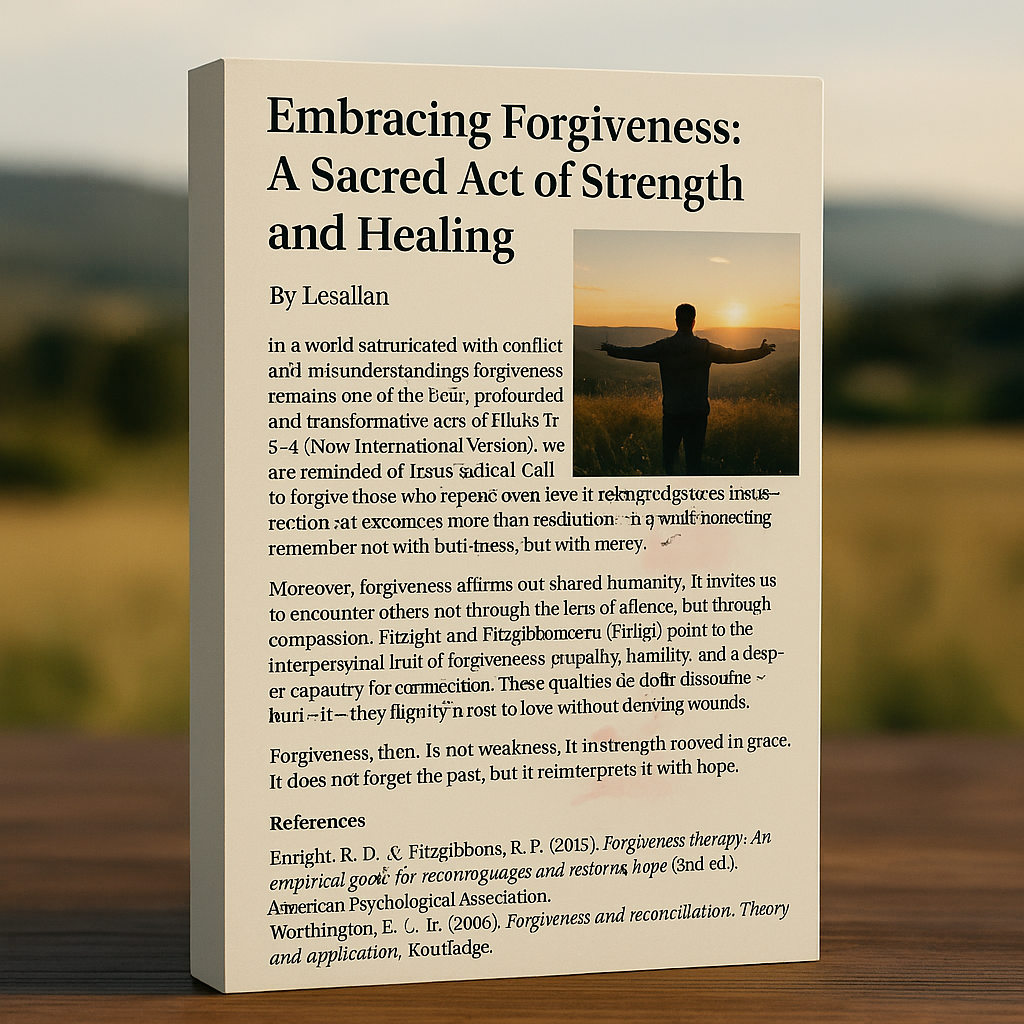
Embracing Forgiveness: A Sacred Act of Strength and Healing
In a world saturated with conflict and misunderstanding, forgiveness remains one of the most profound and transformative acts of grace. Reflecting on Luke 17:3-4 (New International Version), we are reminded of Jesus’ radical call to forgive those who repent, even if they repeatedly transgress. This divine challenge is not just theological—it is deeply relational.
A recent reflection brought this truth to life through a testimony of prayer, confrontation, and reconciliation. It illuminated the emotional complexity of conflict and the redemptive possibility of grace. Forgiveness, in this sense, becomes more than resolution—it becomes resurrection.
As Worthington (2006) explains, forgiveness includes both a decisional and emotional dimension. It is not merely about moving on but about choosing to release resentment while navigating the messy aftermath of pain. That journey—one marked by maturity and spiritual surrender—requires courage. It is a willingness to remember not with bitterness, but with mercy.
Moreover, forgiveness affirms our shared humanity. It invites us to encounter others not through the lens of offense, but through compassion. Enright and Fitzgibbons (2015) highlight the interpersonal benefits of forgiveness, including empathy, humility, and a deeper capacity for connection. These qualities do not dissolve hurt—they dignify it. They allow us to love without denying our wounds and to rebuild trust without erasing our memories.
Forgiveness, then, is not weakness. It is a strength rooted in grace. It does not forget the past, but it reinterprets it with hope. In choosing to forgive, we become co-laborers with Christ in the sacred work of reconciliation.
References:
Enright, R. D., & Fitzgibbons, R. P. (2015). Forgiveness therapy: An empirical guide for
resolving anger and restoring hope (2nd ed.).
American Psychological Association.
Worthington, E. L. Jr. (2006). Forgiveness and reconciliation: Theory and application.
Routledge.