Written by Lesallan – December 6, 2023
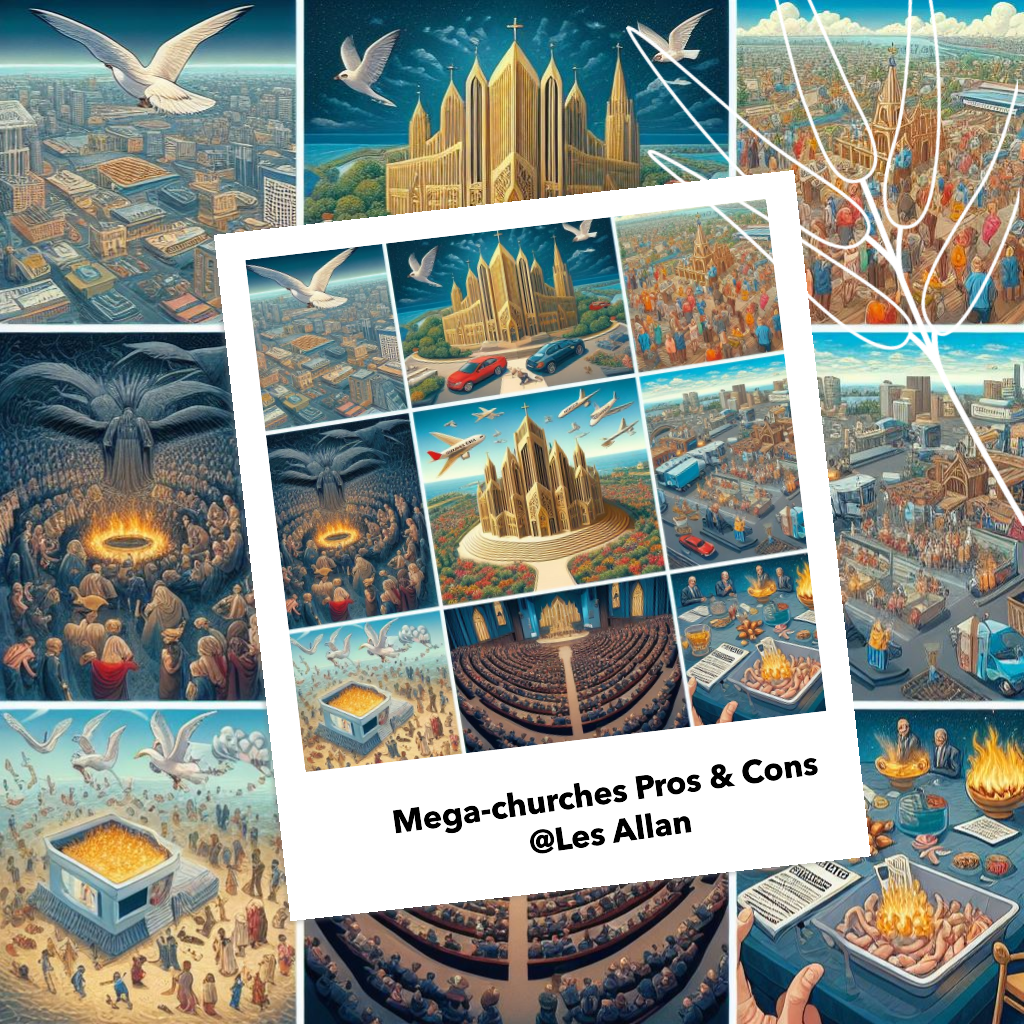
Mega-Churches – Pros & Cons
Written by Lesallan
Ohio Christian University
MIN3150 Ministry Leadership (ONLF23)
Dr. Steven Gerig
December 6, 2023
Mega-Churches – Pros & Cons
Mega-churches are gigantic places of worship that hold a significant number of congregants and members, often in the thousands or even hundreds of thousands. These religious institutions have gained immense popularity in recent years, especially in countries like the United States and South Korea. However, they remain a topic of debate among their critics and supporters, who hold differing views on their merits and drawbacks. While some perceive mega-churches as a sign of divine approval and an effective way to spread the Gospel to a broader audience, others view them as a source of trouble and a deviation from the genuine essence of Christianity.
According to Steele (2023), despite their size, mega-churches have a few positive attributes that make them stand out. For one, they provide a lively and energetic community where people can come together and connect with one another. In addition, they offer diversified programs that cater to different interests and needs, ranging from youth groups and Bible studies to outreach programs and community events. Moreover, mega-churches have the potential to make a more significant impact on society and culture by influencing public opinion and policy through their media presence and social outreach efforts. By leveraging their social platforms and partnering with other organizations, mega-churches can reach a wider audience and effect positive change in their communities.
Large mega-churches have a potential disadvantage in that they may struggle to maintain the same level of intimacy and sense of belonging that smaller churches often foster. In addition, they may become more focused on attracting and retaining large numbers of parishioners rather than on cultivating spiritual depth and discipleship, as highlighted by Somers (2021) in their research.
This student prefers smaller churches because I value the sense of community and intimacy that comes with knowing and being known by others. I also believe that a smaller church is more faithful to the Biblical model of the church as a family of God, where everyone has a role and a responsibility to serve one another. In addition, I think a smaller church is more flexible and responsive to its local congregation’s specific needs and challenges. However, I respect the choices of those who prefer a different church size for various reasons.
Blessings,
Lesallan
References:
Somers, J. (2021, September 5). The Dark Side Of Megachurches. Grunge.com. https://www.grunge.com/596092/the-dark-side-of-megachurches/
Steele, F. (2023, July 1). What are the pros and cons of attending a mega-church (megachurch)? Employment Security Commission. https://www.ncesc.com/what-are-the-pros-and-cons-of-attending-a-mega-church-megachurch/