Lesallan | June 7, 2025
Ohio Christian University
COM3440 Conflict Resolution (ONL25SP4)
Professor Christina Oda
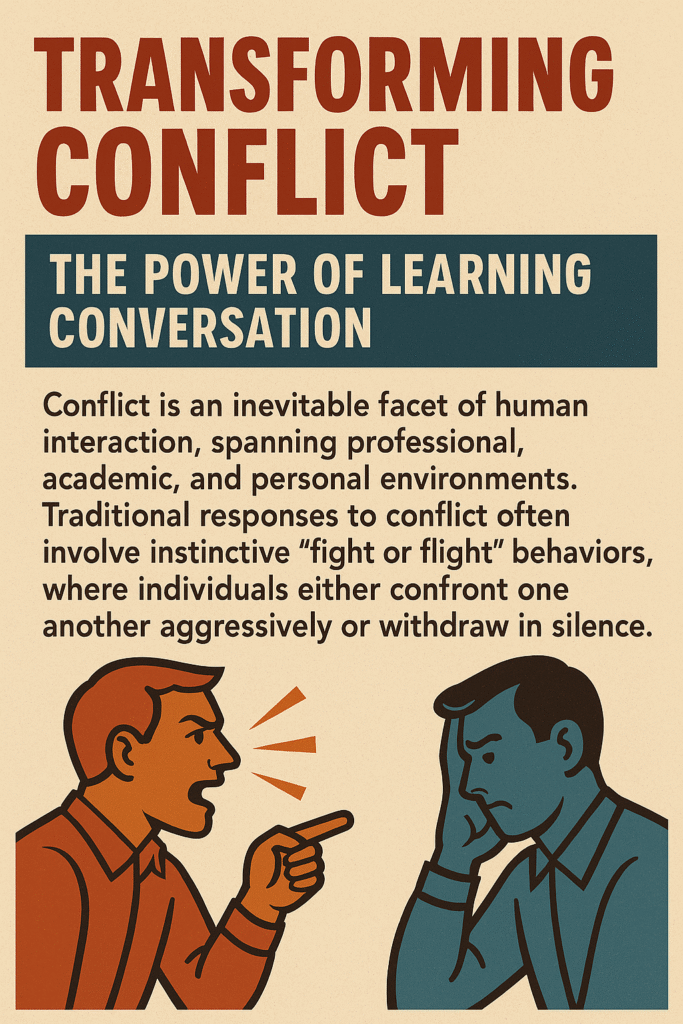
Transforming Conflict: The Power of Learning Conversation
Conflict is an inevitable facet of human interaction, spanning professional, academic, and personal environments. Traditional responses to conflict often involve instinctive “fight or flight” behaviors, where individuals either confront one another aggressively or withdraw in silence. In contrast, adopting a learning stance moves beyond these reactive responses by inviting curiosity about each party’s underlying narratives. As outlined in the Difficult Conversations guide (Hocker et al., 2022) and illustrated in the Managing Difficult Conversations video (Kofman, 2025), a learning conversation reframes conflict as a shared challenge rather than a contest between adversaries.
Central to this approach is the notion that unique individual experiences and cultural influences shape every participant’s perspective. Rather than immediately attributing blame, learning conversations encourage individuals to explore the “stories” behind their viewpoints. This method emphasizes active listening and genuine inquiry, which can reveal hidden assumptions and unmet needs that often underlie disagreements. By focusing on understanding rather than winning an argument, both parties are more likely to work collaboratively toward resolving deeper issues (Hocker et al., 2022, pp. 253-254).
However, adopting a learning stance is inherently counterintuitive when compared to our natural responses to conflict. In moments of tension, emotions such as anger, frustration, and fear typically trigger defensive behaviors that favor either confrontation or withdrawal. These reactions are rooted in survival instincts that prioritize self-protection over mutual understanding. Shifting toward a stance of curiosity requires a deliberate effort to suspend emotional reactivity, allowing individuals to question their own assumptions and engage more constructively with the perspectives of others (Hocker et al., 2022, pp. 253-254).
Embracing the learning conversation model also necessitates a level of vulnerability and humility. Rather than striving to assert one’s own correctness, individuals are encouraged to recognize that no single perspective holds a monopoly on truth. This openness not only facilitates a more accurate assessment of the conflict’s underlying issues but also contributes to the building of trust and long-term relational resilience. The willingness to acknowledge one’s limitations and consider alternative viewpoints can transform conflict from an adversarial struggle into an opportunity for meaningful personal and interpersonal growth (Kofman, 2025).
In summary, the learning conversation approach represents a profound shift from instinct-driven conflict responses to a model based on inquiry, empathy, and shared problem-solving. By investigating the underlying causes of disagreement rather than reacting solely on emotion, individuals can achieve more sustainable resolutions. Although this method requires overcoming ingrained defensive impulses, its potential to foster deeper understanding and stronger relationships makes it a valuable addition to contemporary conflict resolution strategies. Future work in this area may further clarify the processes through which learning conversations enhance communication and reduce the frequency of recurring conflicts.
References:
Hocker, J. L., Berry, K., & Wilmot, W. (2022). Interpersonal conflict (11th ed.). McGraw Hill LLC.
Kofman, F. (2025). How to Have Difficult Conversations and Stay True to Yourself [Video]. Lean In. https://leanin.org/education/managing-difficult-conversations#